Informational
Why an Oven Heats Unevenly
Why an Oven Heats Unevenly is explained through observable symptoms, safe owner checks and the point at which testing is needed. Avoid bypassing safety devices or replacing parts before the failed system has been confirmed.
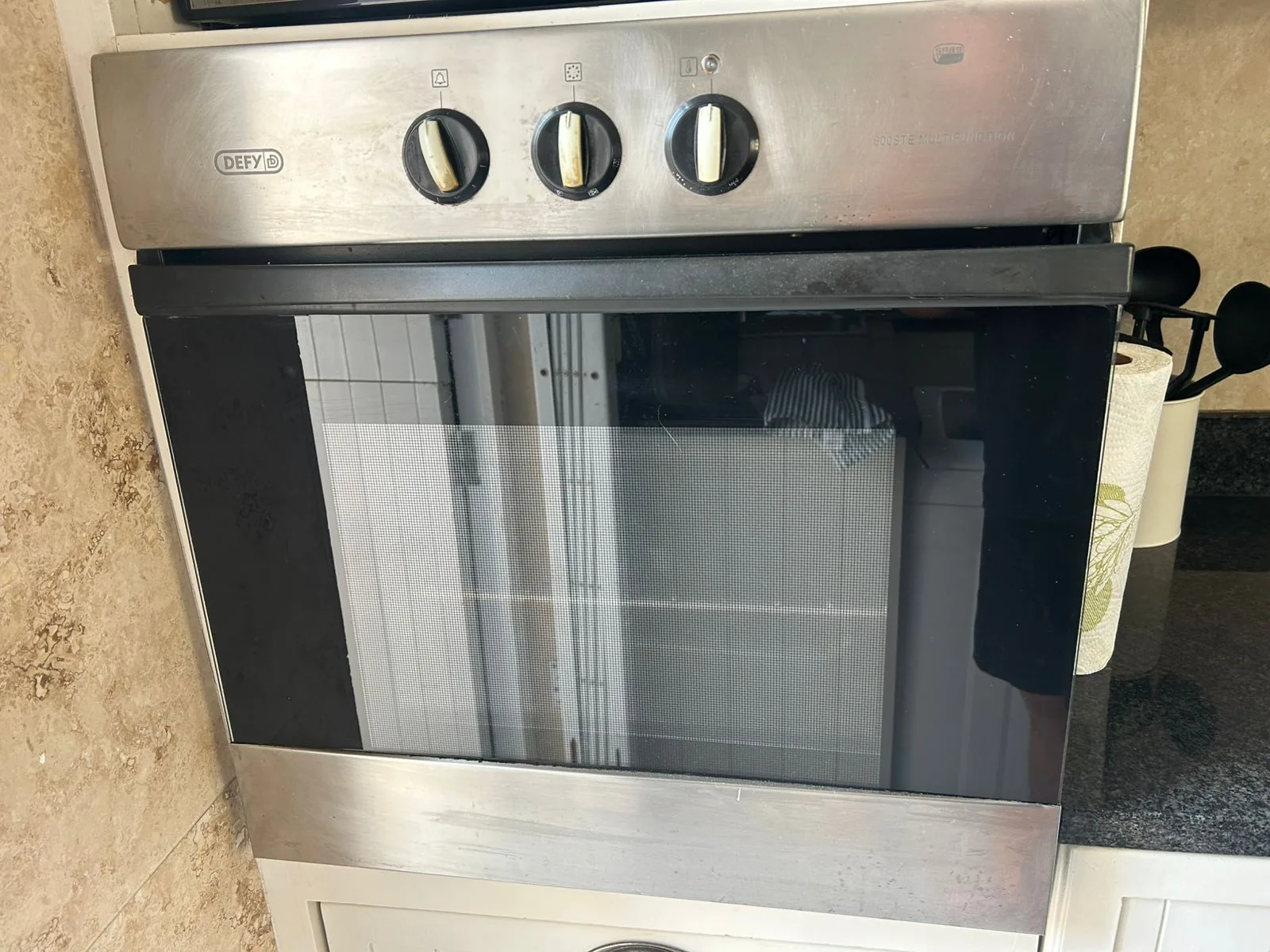
Request appliance service
Book a repair assessment in Kloof
Send the appliance type, fault and address. Required fields are marked. A submitted request is not a confirmed appointment until our team responds.
Practical appliance guidance
Quick answer
Uneven cooking may result from element output, fan circulation, temperature sensing, door sealing, rack position or control cycling.
Appliance Repairs Kloof publishes this guide to help you describe the problem accurately, make only safe user checks and know when to ask us for model-specific diagnosis.
What the symptom or question means
The safest starting point is the observable sequence, not a component suggested by a search result. Different oven models can respond differently to supply, settings, installation, load, temperature, water, airflow and control conditions.
Important observations
One mode performs differently from another
Record this observation together with the model, operating stage and conditions. Our technician may compare supply, isolator and terminal condition with bake, grill and fan elements to determine whether the observation is a cause, a consequence or an unrelated condition.
Fan is silent or noisy
Record this observation together with the model, operating stage and conditions. Our technician may compare bake, grill and fan elements with fan movement and airflow to determine whether the observation is a cause, a consequence or an unrelated condition.
Food burns on one side
Record this observation together with the model, operating stage and conditions. Our technician may compare fan movement and airflow with thermostat, sensors and control outputs to determine whether the observation is a cause, a consequence or an unrelated condition.
Preheat time changes
Record this observation together with the model, operating stage and conditions. Our technician may compare thermostat, sensors and control outputs with door hinges, seal and heat loss to determine whether the observation is a cause, a consequence or an unrelated condition.
Door does not close evenly
Record this observation together with the model, operating stage and conditions. Our technician may compare door hinges, seal and heat loss with supply, isolator and terminal condition to determine whether the observation is a cause, a consequence or an unrelated condition.
Safe checks within the owner’s role
- Compare modes with an appropriate test
- Keep vents clear
- Avoid internal electrical adjustment
Use only the model-specific user manual. Do not remove protective panels, alter fixed wiring, open gas or refrigerant circuits, bridge interlocks or access microwave high-voltage components.
Systems that may need professional testing
- supply, isolator and terminal condition
- bake, grill and fan elements
- fan movement and airflow
- thermostat, sensors and control outputs
- door hinges, seal and heat loss
A useful diagnostic sequence
- Confirm the full appliance and model identity.
- Record and reproduce the condition where safe.
- Check supply, settings and installation before internal parts.
- Test the system associated with the exact operating stage.
- Separate the primary failure from secondary damage.
- Explain compatible parts, cost and replacement considerations.
- Function-test approved work using an appropriate cycle or condition.
When the situation is urgent
Isolate an oven that trips, sparks, smells burnt or has exposed wiring. Do not operate it with a damaged door. Treat sparks, smoke, shock, burning odour, repeated electrical tripping, gas odour, active water near electricity, thawing frozen food or unsafe commercial stock temperature as urgent safety or continuity conditions. Protect people and stock first; attendance remains subject to confirmation.
Cost and repair decisions
No article can provide a reliable fixed repair price from a symptom. The quotation depends on diagnosis, model compatibility, access, parts, labour, secondary damage and the test needed after repair. Repair is more attractive when the fault is isolated and the appliance is otherwise sound; replacement becomes stronger when safety damage, obsolescence, repeat major failures or poor overall value are established.
How to prevent avoidable recurrence
- Follow model-specific loading, cleaning and ventilation instructions
- Investigate changes in noise, heat, cooling, drainage or cycle time early
- Keep filters, seals, hoses, vents and drains maintained within the user role
- Use electrical and surge protection appropriate to the installation
- Retain error history, model details and repair reports
Prepare a useful booking
- Clear rating-label photograph
- Exact symptom and error code
- Operating stage and what remains normal
- Recent power, plumbing, moving, cleaning or repair event
- Photographs of visible conditions without dismantling
- Complete Kloof-area address and access instructions
How we use this information when you contact us
- We start with the exact observation, model and operating stage.
- Our booking team records safety, location and access information.
- Our technician tests the systems the evidence points toward.
- We explain why a suggested part is or is not supported by the diagnosis.
- We help you compare repair scope with the appliance’s condition and replacement value.
When you contact Appliance Repairs Kloof, include the full model, exact fault and service address. We will review the request and confirm the appropriate next step.
Related service and fault guidance
Frequently asked questions
What is the short answer?
Uneven cooking may result from element output, fan circulation, temperature sensing, door sealing, rack position or control cycling.
What should I record first?
Record the model, exact sequence, error, load or temperature, and whether oven does not heat.
Which checks are safe?
Compare modes with an appropriate test; keep vents clear; and avoid internal electrical adjustment. Stay within the user manual.
When should I stop using the appliance?
Isolate an oven that trips, sparks, smells burnt or has exposed wiring. Do not operate it with a damaged door. Stop immediately for sparks, smoke, shock, burning odour, repeated tripping or water near electrical parts.
Can the cause be diagnosed remotely?
The information can narrow the test path, but an internal component should not be confirmed without model-specific evidence and appropriate testing.
How is repair cost determined?
Cost depends on the confirmed cause, model, compatible parts, installation access, secondary damage and functional testing—not the symptom alone.
When is replacement sensible?
Consider replacement when safety or structural damage is extensive, several major systems are failing, essential parts are obsolete or repair value is poor.
What should I include in a booking?
Send the rating label, symptom sequence, error, what still works, recent events, full address and access instructions.
Need a clear next step?
Send one complete appliance repair request
Include the appliance, model, exact fault and service address so our team can respond appropriately.